
Clinical Context & Scientific Evidence
Exploring the scientific foundation of acoustic shockwave therapy through peer-reviewed research and mechanistic understanding

Clinical Content
Shockwave therapy has been studied for decades across a broad range of medical and scientific disciplines. Within the peer-reviewed literature, acoustic shockwaves are described as non-thermal mechanical stimuli capable of influencing biological tissue through mechanotransductive processes.
Rather than acting through pharmacologic or thermal pathways, shockwaves interact with tissue via controlled mechanical energy, initiating cellular signaling responses that have been observed in both preclinical and clinical research settings.
This section provides scientific and educational context regarding shockwave therapy as a modality, including biological mechanisms and findings reported in the broader body of published research.
Mechanistic Observations in the Literature
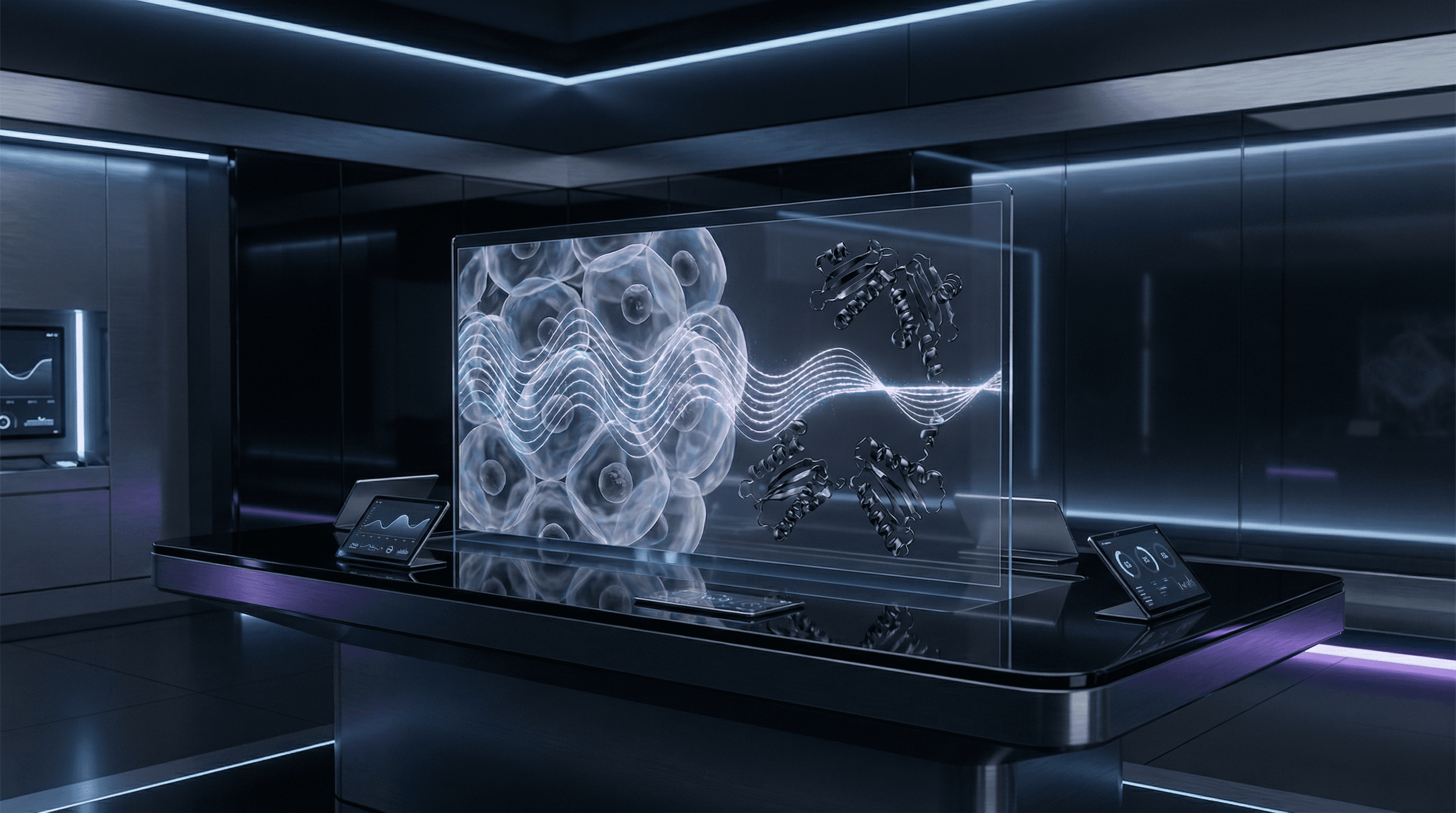
Across multiple studies, shockwave therapy has been associated with observations such as:
These observations have been reported across in vitro, animal, and human clinical research, depending on study design, energy parameters, and application context.
Importantly, biological responses are highly dependent on energy delivery characteristics, including pulse structure, energy density, focal geometry, and tissue type — reinforcing the importance of controlled acoustic delivery systems.
Clinical Research Landscape
The following peer-reviewed publications are frequently cited within the scientific literature on acoustic shockwave therapy. They describe general mechanisms, biological responses, and clinical observations related to shockwave technology as a class.
These studies are provided for educational and reference purposes only and do not constitute claims regarding specific clinical outcomes, indications, or performance of the PACE® system.
Selected Peer - Reviewed References
Foundational & Mechanistic Research
Delius M, Draenert Y, Draenert K.
Biological effects of shock waves: In vivo and in vitro experiments. Ultrasound in Medicine & Biology
Mariotto S, Cavalieri E, Amelio E, et al.
Extracorporeal shock waves: From lithotripsy to tissue regeneration. Journal of Biological Regulators & Homeostatic Agents
Holfeld J, Tepeköylü C, Reissig C, et al.
Shockwave therapy induces angiogenesis via VEGF signaling. Journal of the American College of Cardiology
Musculoskeletal & Soft Tissue Research
Wang CJ.
An overview of shock wave therapy in musculoskeletal disorders. Chang Gung Medical Journal
Ogden JA, Alvarez RG, Levitt R, Marlow M.
Shock wave therapy for chronic proximal plantar fasciitis. Clinical Orthopaedics and Related Research
Haupt G.
Use of extracorporeal shock waves in the treatment of orthopedic disease. Journal of Urology
Vascular, Cellular, and Tissue Response Studies
Reher P, Doan N, Bradnock B, Meghji S, Harris M.
Effect of shock waves on the release of growth factors. Journal of Oral and Maxillofacial Surgery
Ciampa AR, de Prati AC, Amelio E, et al.
Nitric oxide mediates anti-inflammatory action of extracorporeal shock waves. FEBS Letters
Saggini R, Figus A, Troccola A, Cocco V, Carnevale A.
Extracorporeal shock wave therapy and tissue repair. Clinical Cases in Mineral and Bone Metabolism
Important Scientific
Disclosure
The studies cited above describe general findings related to acoustic shockwave therapy and are not specific to PACE® Technology, or any particular device configuration.
Clinical outcomes may vary based on:
Energy delivery parameters
Treatment protocols
Patient-specific factors
Device architecture
StemWave® does not claim that the results described in these studies are directly attributable to its system unless explicitly supported by device-specific clinical evidence and regulatory clearance.
Regulatory & Educational Disclaimer
Disclaimer: This content is provided for scientific and educational purposes only. It is not intended to diagnose, treat, cure, or prevent any disease. Individual results may vary. Information presented here does not constitute medical advice. Clinicians should consult the device Instructions for Use (IFU) and applicable regulatory labeling prior to use.

Disclaimer
Individual results may vary. Neither StemWave nor any of its subsidiaries dispense medical advice. The contents of this website do not constitute medical, legal, or any other type of professional advice. Information related to various health, medical, and fitness conditions and their treatment is not meant to be a substitute for the advice provided by a physician or other medical professional. You should not use the information contained herein for diagnosing a health or fitness problem or disease. Rather, please consult your healthcare professional for information on the courses of treatment, if any, which may be appropriate for you. Please consult the User Manual (IFU) and all labeling provided with the product prior to use.